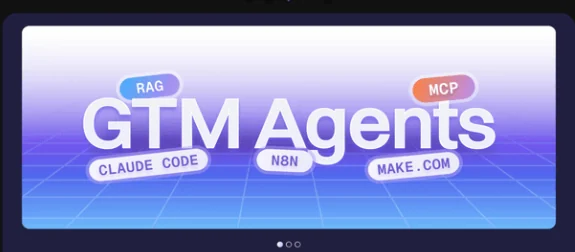
StackOptimise – GTM Agents Course
$349.00 Original price was: $349.00.$35.00Current price is: $35.00.
- 24/7 Contact Support & Telegram - Ecomkevin_1
- You Can Request Any Courses
- Original Courses HD Qualite and links updated
Guaranteed Safe Checkout

Description
StackOptimise – GTM Agents Course: Complete Course Overview and Review
Introduction
Artificial intelligence is changing how businesses approach marketing, sales, customer acquisition, and business operations. Companies are increasingly looking for ways to automate repetitive tasks and build smarter systems. As a result, AI agents are becoming an important area of interest for entrepreneurs, marketers, and technology professionals.
StackOptimise – GTM Agents Course is a course-related offering for people interested in the intersection of AI agents and go-to-market (GTM) strategies. Its title suggests a focus on using intelligent automation to support business growth and commercial activities.
People searching for this course are likely interested in understanding what GTM agents are, how AI can support business workflows, and whether this training is relevant to their professional goals.
This overview explores the broader concepts behind AI-powered go-to-market systems. It also explains potential learning areas, suitable audiences, practical applications, and important details to verify before purchasing.
Course Overview
Go-to-market strategy refers to the approach a business uses to introduce products or services to customers. It involves understanding the target audience, communicating product value, generating demand, and supporting the sales process.
Traditionally, these activities require coordination across different teams and tools. Marketing professionals create campaigns, sales teams manage prospects, and operations teams organize information.
However, AI agents introduce new possibilities for coordinating and automating certain activities.
An AI agent is a software-based system that can work toward a defined objective. Depending on its design, it may interpret information, use connected tools, complete tasks, and respond to changing inputs.
The StackOptimise – GTM Agents Course title brings these two areas together: AI agents and go-to-market operations.
For professionals interested in modern business automation, this is a relevant subject to explore.
The exact curriculum, software requirements, teaching format, and included resources for this specific course should be confirmed through the provider’s current product information.
What Are GTM Agents?
GTM stands for go-to-market. It describes the activities involved in bringing an offer to the market and connecting it with potential customers.
These activities can include:
- Market research and customer discovery.
- Lead generation and prospect research.
- Marketing campaign planning.
- Sales outreach and follow-ups.
- Customer segmentation.
- Sales pipeline management.
- Performance tracking and reporting.
AI agents can potentially support parts of these workflows.
For example, an AI-powered system might collect publicly available business information, organize prospect data, or help prepare personalized outreach drafts.
Similarly, connected systems may help teams manage repetitive administrative tasks.
However, automation should always be designed around clear objectives. Human review remains important, especially when dealing with customer information, business decisions, and external communication.
Understanding this relationship is central to exploring AI-powered GTM operations.
What Learners Can Expect to Explore
The following topics describe the wider subject areas associated with GTM agents. They are not a confirmed list of lessons or modules included in StackOptimise – GTM Agents Course.
1. Understanding AI Agents
AI agents are becoming increasingly relevant in modern business environments.
Unlike a basic chatbot that primarily responds to individual prompts, an agent can be designed to work through multiple steps toward a particular objective.
Depending on its configuration, it may interact with external tools, process information, and perform defined actions.
Understanding how these systems operate is an important starting point for anyone interested in business automation.
Learners exploring this field should understand the difference between AI assistants, workflow automation, and more autonomous agent systems.
2. Understanding Go-to-Market Strategy
A successful GTM strategy begins with understanding the market.
Businesses need to identify their customers, define their value proposition, and choose suitable channels for reaching their audience.
For example, a software company targeting small businesses may use a different sales approach from an enterprise software provider.
Therefore, understanding customer needs is essential before introducing automation.
AI can support research and information organization. However, it cannot replace a clear business strategy.
3. AI-Powered Lead Generation
Lead generation involves identifying potential customers who may be interested in a product or service.
It is an important part of many sales and marketing processes.
AI-powered tools can help organize prospect information, identify relevant business characteristics, and support research activities.
For example, an automated workflow might categorize companies based on industry or business size.
This can help sales professionals organize their prospecting activities.
Nevertheless, lead quality matters more than simply collecting large lists of contacts. Businesses should also follow applicable privacy laws and communication requirements.
4. Sales Workflow Automation
Sales teams often manage repetitive activities.
These may include updating customer records, organizing prospect information, preparing follow-up messages, and tracking opportunities.
Automation can help reduce manual work when these processes follow clear rules.
AI agents may also support certain tasks that involve interpreting information or preparing responses.
However, sensitive communications and important sales decisions should receive appropriate human review.
The goal is not to remove people from the sales process. Instead, it is to help them spend more time on valuable activities.
5. AI-Assisted Market Research
Market research helps businesses understand customer needs, competitors, and industry developments.
It can also reveal potential opportunities and gaps in the market.
AI tools can support research by summarizing information, organizing findings, and identifying patterns across available data.
For instance, a business may use AI to organize customer feedback or compare product positioning.
However, research quality depends on the accuracy of the underlying information.
Therefore, important findings should be checked against reliable sources before they influence business decisions.
6. Workflow Integration and Automation
Business automation often involves multiple software applications.
A marketing team might use one platform for customer records, another for communication, and a separate tool for reporting.
Connecting these systems can make information easier to manage.
AI agents may work alongside automation platforms and connected applications to support more advanced workflows.
Understanding integrations, permissions, and data flow is therefore important.
Additionally, businesses should consider security and reliability before connecting AI systems to important operational tools.
7. Improving Marketing Operations
Marketing teams manage many activities, from campaign planning to lead management and performance analysis.
AI-powered workflows can support selected tasks within these processes.
For example, AI may help organize campaign information, prepare content drafts, or summarize performance data.
These applications can make certain workflows more efficient.
However, marketing strategy still requires human judgment. Brand positioning, customer understanding, and creative direction remain important.
8. Building Scalable Business Systems
As businesses grow, their operational requirements often become more complicated.
Tasks that were manageable for a small team may become difficult when customer numbers and sales activity increase.
Well-designed automation can help businesses manage recurring processes more consistently.
However, scaling automation requires careful planning.
Systems should be documented, monitored, and tested. Businesses also need a clear process for handling errors and unusual situations.
9. Human Oversight and Responsible AI
AI automation introduces responsibilities.
Agents may process customer information, interact with external services, or generate business communications.
Therefore, businesses should establish clear permissions and review procedures.
Important considerations include data privacy, accuracy, access control, and compliance.
Human oversight helps ensure that automated systems operate within appropriate boundaries.
Who Should Consider StackOptimise – GTM Agents Course?
This course may be relevant to people interested in combining artificial intelligence with business growth and operational automation.
1. Entrepreneurs and Business Owners
Entrepreneurs often manage marketing, sales, customer communication, and daily operations.
AI automation may help them identify repetitive tasks and explore more efficient workflows.
For business owners interested in using AI beyond basic content generation, GTM agents are an interesting area to investigate.
2. Marketing Professionals
Marketing teams regularly work with customer research, campaign planning, lead generation, and reporting.
Understanding AI agents can help marketers explore new ways to organize these activities.
Additionally, knowledge of automation can complement existing digital marketing skills.
3. Sales Professionals
Sales professionals spend considerable time researching prospects and managing customer relationships.
AI-powered systems may help organize information and support parts of the sales process.
However, successful selling still depends on communication, trust, and understanding customer needs.
4. Agency Owners and Consultants
Marketing agencies and consultants often manage multiple clients and recurring workflows.
Automation may help them organize operations and reduce repetitive administrative tasks.
Those interested in offering AI-related services may also find GTM automation relevant to their professional development.
5. AI Automation Beginners
People exploring AI automation may want to understand how agents can support real business activities.
This subject provides a business-focused perspective on artificial intelligence.
However, beginners should check the actual course requirements before enrolling. The level of technical knowledge needed has not been independently confirmed.
6. Technology and Operations Professionals
People working with software integrations, business systems, and operational processes may also find the subject interesting.
Understanding how AI agents interact with business tools can complement existing technical knowledge.
Key Benefits of Learning About GTM Agents
Learning about AI-powered go-to-market systems can provide several potential advantages.
Understanding practical AI applications: Explore how artificial intelligence can support marketing, sales, and business operations.
Greater automation awareness: Identify repetitive activities that may be suitable for workflow automation.
Improved business efficiency: Understand how connected systems can reduce unnecessary manual work.
Better sales operations: Explore ways to organize prospect research and customer information.
Stronger marketing workflows: Learn about the relationship between AI tools and marketing activities.
Scalable business processes: Understand why structured automation can support growing organizations.
Technical and strategic awareness: Develop a broader understanding of AI agents and their business applications.
Career development: Build knowledge in an area that is becoming increasingly relevant across different industries.
These are potential benefits of studying GTM automation. They should not be interpreted as guaranteed results from purchasing this specific course.
Why AI Agents Are Becoming Important for Go-to-Market Teams
Modern businesses operate in an environment where speed and organization matter.
Marketing teams need to understand customers. Sales teams need relevant prospect information. Meanwhile, business owners need visibility into their operations.
Managing these activities manually can become challenging as a company grows.
AI agents offer another way to approach certain processes.
For example, an agent-based workflow might gather information, organize it, and prepare a summary for a team member.
Another workflow might help categorize incoming inquiries or support internal reporting.
These applications can reduce repetitive work when they are properly designed.
Furthermore, AI agents can potentially connect different stages of a business workflow.
However, automation is not automatically beneficial. Poorly designed systems can create inaccurate information, unnecessary complexity, or unwanted actions.
Therefore, understanding the business problem should always come before choosing an AI solution.
How to Apply GTM Automation Concepts in a Business
Understanding AI agents is useful. Applying them to practical business challenges is where their value becomes clearer.
Here are several considerations for businesses exploring this area.
Identify Repetitive Tasks
Start by examining everyday business operations.
Look for tasks that follow predictable steps and require significant manual effort.
Examples include organizing lead information, preparing internal reports, and categorizing customer inquiries.
These may be potential automation opportunities.
Define Clear Objectives
Every automation workflow should have a specific purpose.
For example, an objective might be to organize incoming leads or reduce the time spent preparing research summaries.
Clear objectives make it easier to evaluate whether a system is useful.
Choose Suitable Tools
Different automation tasks require different technologies.
Some workflows may need basic integrations, while others may require AI models, databases, or external applications.
Therefore, choose tools based on actual requirements rather than following trends.
Test Before Scaling
A workflow should be tested before it becomes part of an important business process.
Start with a limited use case. Review the outputs and identify potential errors.
Then, make improvements before expanding the system.
Maintain Human Oversight
AI systems should operate within clearly defined permissions.
Important customer interactions, financial decisions, and sensitive actions may require human approval.
This approach helps maintain accountability and reduces unnecessary risk.
What to Check Before Purchasing
Before buying StackOptimise – GTM Agents Course, review the official product information.
First, examine the course syllabus. Confirm which AI agent and go-to-market topics are actually covered.
Next, check the technical requirements. Determine whether the training assumes prior knowledge of automation platforms, programming, or AI tools.
Also, verify the learning format. Confirm whether the provider offers recorded lessons, live instruction, practical exercises, or written resources.
Do not assume that software access, templates, community membership, or personal support are included.
Additionally, review the current price, access conditions, and refund policy.
Finally, consider your learning objectives. A business-focused AI course may be useful for marketers, while technical professionals may need more advanced implementation training.
Is StackOptimise – GTM Agents Course Worth Considering?
The course may be worth exploring if you want to understand how AI agents can support go-to-market activities.
Its subject matter connects artificial intelligence with practical business functions. These include marketing, sales operations, lead generation, and workflow automation.
This makes the topic relevant to entrepreneurs, agencies, consultants, and professionals interested in business automation.
However, the value of the specific course depends on its verified curriculum, teaching approach, and included resources.
Before purchasing, compare the actual course contents with your expectations.
Consider whether you want a general understanding of GTM agents or practical technical guidance for building automated systems.
Making this distinction can help you choose an educational resource that fits your needs.
Frequently Asked Questions
1. What is StackOptimise – GTM Agents Course?
StackOptimise – GTM Agents Course is a course-related offering focused on the subject of AI agents and go-to-market activities. Its exact curriculum should be confirmed through the provider’s current course description.
2. What does GTM stand for?
GTM stands for go-to-market. It describes the strategy a business uses to introduce its products or services to customers.
3. What are GTM agents?
GTM agents are AI-powered systems designed to support go-to-market activities. Depending on their configuration, they may assist with research, lead management, marketing operations, and sales workflows.
4. Who should consider this course?
Entrepreneurs, marketers, sales professionals, agency owners, consultants, and people interested in AI automation may find the subject relevant.
5. Do I need programming knowledge?
The technical requirements for this specific course have not been independently confirmed. Check the official course information to determine whether programming or previous automation experience is required.
6. Can AI agents help with lead generation?
Yes. Depending on their design, AI agents can support prospect research, information organization, and lead qualification workflows. However, data accuracy and responsible outreach remain important.
7. Can GTM agents automate sales processes?
AI agents can support selected sales activities, such as organizing information and preparing follow-up drafts. However, important customer interactions should receive appropriate human oversight.
8. Does the course include practical projects or templates?
Specific projects, templates, and downloadable resources have not been confirmed. Review the official product listing to establish exactly what is included.
9. Can beginners learn about AI agents?
Beginners can explore the subject of AI agents and their business applications. However, the suitability of this particular course depends on its teaching level and technical requirements.
10. Does learning GTM automation guarantee business growth?
No. AI automation does not guarantee revenue, customer acquisition, or business growth. Results depend on the business model, implementation, market conditions, and execution.
11. What should I check before enrolling?
Review the syllabus, technical requirements, delivery format, included resources, access period, price, and refund policy before purchasing.
12. Why are AI agents relevant to modern businesses?
AI agents can support selected business workflows and reduce repetitive tasks. Consequently, they are becoming an area of interest for organizations exploring operational efficiency and automation.
Final Verdict
StackOptimise – GTM Agents Course explores an increasingly relevant area of business technology: using AI agents to support go-to-market operations.
The connection between artificial intelligence, marketing, sales, and workflow automation offers interesting possibilities for modern businesses.
For entrepreneurs and professionals, understanding these systems can provide a broader perspective on how technology supports business operations.
However, successful implementation requires more than using AI tools. It involves identifying the right problems, selecting suitable technology, testing workflows, and maintaining human oversight.
Before purchasing, verify the course curriculum and confirm that its content matches your technical experience and business goals.
If you are interested in exploring AI agents from a go-to-market perspective, this program may be worth considering as part of your professional learning journey.
Reviews
There are no reviews yet.